“Yunnan small grain coffee cultivation techniques” search results (200)

Coffee Story Coffee Culture in Pu'er Dakaihe Village
There is no winter feeling in Pu'er, Yunnan Province at the end of November. King Ka Nong Middle School in Dakaihe Village, Nanping Town, is drying peeled coffee fruits in his yard. In 2013, many Yunnan farmers, including the veteran coffee farmer, who has been growing coffee for more than 20 years, encountered a series of problems at low purchase prices, approaching the cost line. Although the purchase price of coffee is relatively low now, I believe
2015-08-07 Pu'er Kaihe village coffee story coffee culture end of the month Yunnan and
Columbia Colombia Millennium Village is a kind of robusta or arabica ah? Coffee beans
The global coffee bean species are mainly divided into: Arabica (Arabica) and Robusta (Canephora), of which Arabica coffee beans account for about 70%80%coffee has more than 100 coffee varieties, more common coffee are: Arabica Arabica, outstanding personality, unique flavor, is the main boutique coffee, mainly used for coffee shop operations and high-end coffee market supply; Robusta
2016-04-22 columbia Colombia Millenium Robbs Booth or Rabbi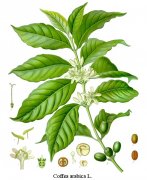
Coffee cultivation techniques detailed explanation of planting knowledge of Coffee trees
Coffee, cocoa and tea are called the three major beverages in the world, and their output, consumption and output value all rank first. In addition to being used as a beverage, coffee can also extract caffeine and coffee oil; in medicine, it can be used as an anesthetic, stimulant and diuretic cardiotonic agent. Coffee pulp can be used to make wine, vinegar, pectin and molasses; dried pulp can be used as animal feed; dried fruit shell can be used as fertilizer and burning
2015-02-16 Coffee cultivation techniques planting knowledge detailed explanation
Chinese Coffee--Pu 'er Coffee
Zhang Kui, a farmer from Dakaihe Donghui Forest Society in Nanping Town, Simao District, Pu 'er City, is drying coffee beans in front of a newly built house. There are 19 coffee farmers in the village, and every family is harvesting the joy of harvest. At the coffee purchasing station, coffee of the quality meeting the purchasing requirements is replaced into uniform packaging bags and stored for shipment. Zhang Kui uses a machine to peel coffee fresh fruit in his yard. now is
2014-06-18 Coffee knowledge Pu 'er coffee Chinese coffee
Basic knowledge of coffee beans which country produces coffee beans?
The main varieties of coffee beans are Arabica and Robasda. According to theory, as long as the countries and regions where coffee trees are grown can be grown, which country produces coffee beans? Today we will talk about which country produces coffee beans. Brazil (South America), the largest coffee producer, accounts for 1/3 of the global consumption of coffee of all grades and types.
2015-02-07 Coffee beans basics common sense which household products coffee beans main varieties divided into pull
The various parts of the coffee plant decompose the shallow root crop of coffee.
Coffee is a shallow root crop, and the plants propagated with seeds have conical roots. Root system refers to the general name of root. The root morphological distribution and depth of shade varieties / soil conditions and agricultural technical measures are different. From the point of view of varieties, the roots of small / medium grain species are shallower, while those of large grain species are deeper. Under normal circumstances, there is a thick and short taproot and many well-developed lateral roots. Yunnan small-grain coffee has a 4-year-old fruit.
2015-09-23 Coffee plants parts decomposition shallow roots crops coffee species
Coffee beans and countries
Central American Mexican coffee is mainly concentrated in Chabas, Oaxaca, Veracruz, Puebla, Guerrero, Idarco, San Luis, Puerto Rico. The annual production is about 5 million bags, which is the main source of agricultural income. Mexican coffee beans are large in size and produce coffee that is soft, mellow and aromatic. Coffee color is light, acidity is large, most of them grow under natural conditions, do not make
2014-08-08 Coffee knowledge Coffee beans and countries Coffee encyclopedia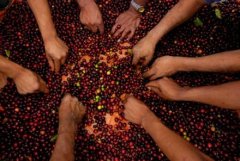
Coffee fragrance from Pu'er the cooperation between the Chinese Academy of Sciences and the Chinese Academy of Sciences helps the development of coffee industry.
Cooperation between the Chinese Academy of Sciences and the Chinese Academy of Sciences to promote the development of coffee industry our reporter Wang Shan talked about Pu'er, a tea city, and many people will think of Pu'er tea. However, as everyone knows, Pu'er is not only famous for its tea flavor, but also known as the coffee capital of China. Recently, the Pu'er Coffee Culture Festival ended perfectly with the Pu'er Coffee Tour. During this coffee event, there is a piece of Manxieba in Nanping Town, Simao District.
2015-02-03 Pu'er floating Coffee Chinese Academy of Sciences Academy of Sciences Cooperation Assistance Industrial Development
Basic knowledge of Coffee Coffee beans and countries
Mexican coffee from Central America and Mexico is mainly concentrated in Chabas, Oaxaca, Veracruz, Puebla, Guerrero, Hidalco, St. Lewis and Porto. The annual output is about 5 million bags, which is the main source of income for agricultural products. Mexican coffee beans have large particles, and the coffee produced is smooth, mellow and fragrant. Coffee has a light color and high acidity, and most of them grow under natural conditions.
2014-10-29 Coffee knowledge coffee basics coffee beans coffee countries
The relationship between coffee beans and countries in the producing area of high-quality coffee beans
Mexican coffee from Central America and Mexico is mainly concentrated in Chabas, Oaxaca, Veracruz, Puebla, Guerrero, Hidalco, St. Lewis and Porto. The annual output is about 5 million bags, which is the main source of income for agricultural products. Mexican coffee beans have large particles, and the coffee produced is smooth, mellow and fragrant. Coffee has a light color and high acidity, and most of them grow under natural conditions.
2015-01-19 Boutique coffee beans origin country association Central America Mexico Mexica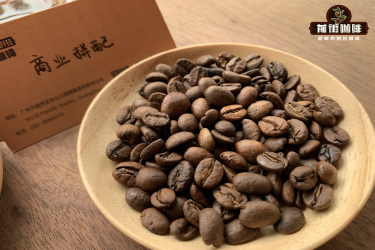
The difference between Arabica and Robusta the harm of robusta beans
Robusta generally grows in the Eastern Hemisphere, mainly in Africa, Indonesia and Vietnam. Arabica is also grown in Africa and Papua New Guinea, but today it is mainly grown in Latin America. Among the major coffee producing countries in the world, Colombia only grows Arabica coffee. Most of the coffee grown in Vietnam is Luo.
2023-04-16 Rabbi Robes Booth difference Fine goods Coffee beans Africa Indonesia Vietnam
Coffee classroom: the difference between Arabica and Robusta coffee beans
The world's coffee beans are mainly divided into two categories: small seed coffee bean Arabica Arabica and medium grain coffee bean Robusta Robsta. Small seed coffee beans grow in the temperate and tropical climate of Haiba 600-2000 meters, with rich and delicate taste, strong smell, high acidity and smooth texture, bringing strong aroma and smoothness to the coffee.
2015-03-05 Coffee lecture hall Arabica Robusta coffee beans difference all
Introduction of major coffee producing areas in the world
Coffee comes from coffee beans, which are harvested and processed from the fruit of trees. Coffee trees grow at the center of the equator, between latitudes of 25 degrees south and north, and are called the homes of tropical or subtropical countries called coffee belts. At present, there are about 60 coffee-producing countries. Coffee is produced in South America, Central America, the West Indies, Asia, Africa, Arabia, the South Pacific and
2014-08-15 Coffee knowledge world coffee producing areas coffee bean producing areas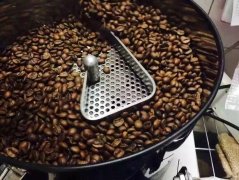
Introduction of major coffee producing areas in the world
Coffee comes from coffee beans, which are harvested and processed from the fruit of trees. Coffee trees grow at the center of the equator, between latitudes of 25 degrees south and north, and are called the homes of tropical or subtropical countries called coffee belts. At present, there are about 60 coffee-producing countries. Coffee is produced in South America, Central America, the West Indies, Asia, Africa, Arabia, the South Pacific and
2015-10-27 World main coffee producing area introduction boutique coffee beans is from
Introduction to the main Coffee producing areas in the World
Coffee comes from coffee beans, which are harvested and processed from the fruit of trees. Coffee trees grow at the center of the equator, between latitudes of 25 degrees south and north, and are called the homes of tropical or subtropical countries called coffee belts. At present, there are about 60 coffee-producing countries. Coffee is produced in South America, Central America, the West Indies, Asia, Africa, Arabia, the South Pacific and
2015-04-14 Coffee basics common sense world major producing areas introduction coffee is from coffee beans
The main coffee producing areas in the world introduce the types of fine coffee beans.
Coffee comes from coffee beans, which are harvested and processed from the fruit of trees. Coffee trees grow at the center of the equator, between latitudes of 25 degrees south and north, and are called the homes of tropical or subtropical countries called coffee belts. At present, there are about 60 coffee-producing countries. Coffee is produced in South America, Central America, the West Indies, Asia, Africa, Arabia, the South Pacific and
2015-01-27 World main coffee producing areas introductions boutique coffee beans types are from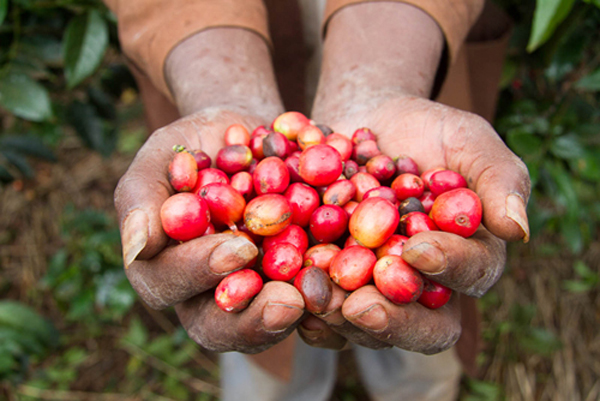
The most detailed introduction to coffee beans in the world. Coffee beginners must see the knowledge points
Coffee comes from coffee beans, which in turn are harvested and processed from the fruits of trees. Coffee trees grow at the equator as the center, between 25 degrees north and south latitude, known as the coffee belt tropical or subtropical countries home, coffee production countries currently have about more than 60 countries, coffee production in South America, Central America, West Indies, Asia, Africa, Arabia, South Pacific and
2015-12-02 world coffee beans most detailed detailed introduction beginner coffee must-see knowledge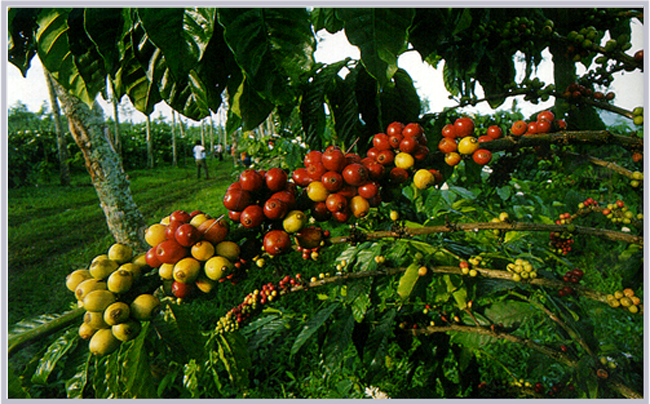
Coffee Estate Knowledge Points: Collection and classification of world boutique coffee estates in detail
Coffee comes from coffee beans, which are harvested and processed from the fruits of trees. Coffee trees grow at the equator as the center, between 25 degrees north and south latitude, known as the coffee belt in tropical or subtropical countries home, coffee beans are currently. Coffee comes from coffee beans, which in turn are harvested and processed from the fruits of trees. Coffee trees grow at the equator.
2015-12-25 coffee estate knowledge essentials world boutique collection classification detail introduction
Introduction of major coffee producing areas in the world Central and South American coffee beans, African coffee beans, Asian coffee beans
[introduction] Coffee comes from coffee beans, which are harvested and processed from the fruit of trees. Coffee trees grow at the center of the equator, between latitudes of 25 degrees south and north, and are called coffee belts in the homes of tropical or subtropical countries. at present, raw coffee comes from coffee beans, which are harvested and processed from the fruits of the trees. Coffee trees grow at the center of the equator.
2016-04-22 World main coffee producing areas introduction Central and South America coffee beans Africa Asia
Explanation on the types and characteristics of individual Coffee in Coffee Shop
I often look forward to a scene: a leisurely afternoon, sitting by the window, a little lazy, a little blurred, the music as if nothing, reading a favorite novel, the coffee on the table gives off a seductive fragrance, for a moment, the dark fragrance floats, just like a wonderland, but for many people who don't drink coffee often, what does it taste like in those coffee with many varieties and advantages? Where?
2015-06-18 Dark fragrance floating coffee single product regular meeting longing one scene leisure afternoon